What's on the Market? A Practical Guide to Ashwagandha Brands and Forms
- Applied Alchemy

- Feb 23
- 6 min read
Ashwagandha has become one of the most popular adaptogens on the market. Walk into almost any pharmacy or health store, and you will find multiple brands, potencies, extract ratios, and trademarked versions. For many consumers, the difficulty is not deciding whether to take ashwagandha, but choosing which one is appropriate.
This article breaks down what is currently available, how the products differ, and who each type may be best suited for. The brands mentioned below are not the only quality options on the market, but they represent a helpful cross-section of price points, potencies, and extraction methods.
A Quick Overview: What Is Ashwagandha?
Ashwagandha, botanically known as Withania somnifera, is a traditional herb used in Ayurvedic medicine for thousands of years. It is classified as an adaptogen, meaning it helps the body adapt to physical and psychological stress.
Historically, it has been used to support:
Stress resilience
Nervous system balance
Energy and vitality
Sleep quality
Physical performance
Hormonal balance
Its primary active compounds are withanolides, which are believed to contribute to its stress-modulating and neuroprotective effects.
Raw Herb vs Extract: A Critical Distinction
Before comparing brands, it is important to understand the difference between raw herb and extracts.
Raw Herb
Raw herb capsules contain powdered ashwagandha root in its natural state. These products are generally milder and require higher doses, often 1,000 to 2,000 mg daily, divided into multiple capsules. Effects may take longer to notice, but they can be ideal for gentle, long term support.
Extracts
Extracts concentrate the active constituents of the herb. You may see ratios such as:
2:1
10:1
40:1
A 2:1 extract means 2 parts of raw herb were used to produce 1 part extract. A 10:1 extract is more concentrated, and a 40:1 extract even more so. Standardized extracts go one step further. They are processed to contain a specific percentage of active compounds, usually measured as withanolides. For example, 7 percent or 35 percent withanolides. This ensures consistent potency from batch to batch. Higher ratios and higher standardization percentages generally mean greater potency, but that does not automatically mean better for everyone.
Brand Breakdown
Let us take a closer look at some of the brands currently available. This is only a small sample of what is on the market, and there are many other quality options available, so the goal is to find the one that aligns best with your needs, preferences, and budget.
Soaring Free Ashwagandha Capsules
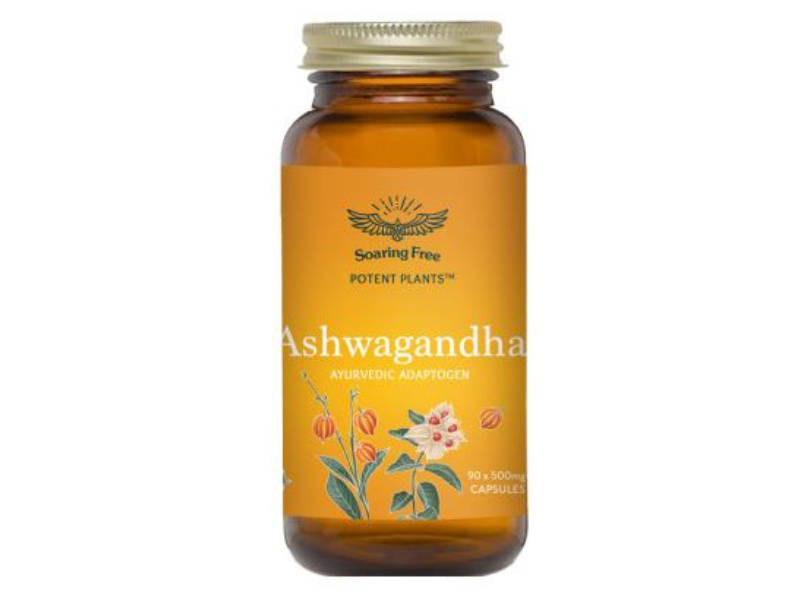
500 mg raw herb per capsule
90 capsules per bottle
Average cost: R299
Available at select health stores and delis, Wellness Warehouse, Faithful to Nature
This is a cost-effective raw herb option suitable for someone looking for gentle, everyday, long-term support. Because it is not concentrated, it is less potent per capsule, but that is not necessarily a disadvantage.
Many individuals do not require a high-potency extract, especially if they are new to adaptogens or sensitive to supplements. The recommended dose is typically 2 to 4 capsules per day. As with most raw herb products, it may take several weeks before noticeable effects occur.
Best suited for:
Individuals wanting foundational support
Those sensitive to stronger extracts
Long-term daily use
Phyto Force Ashwagandha Tincture
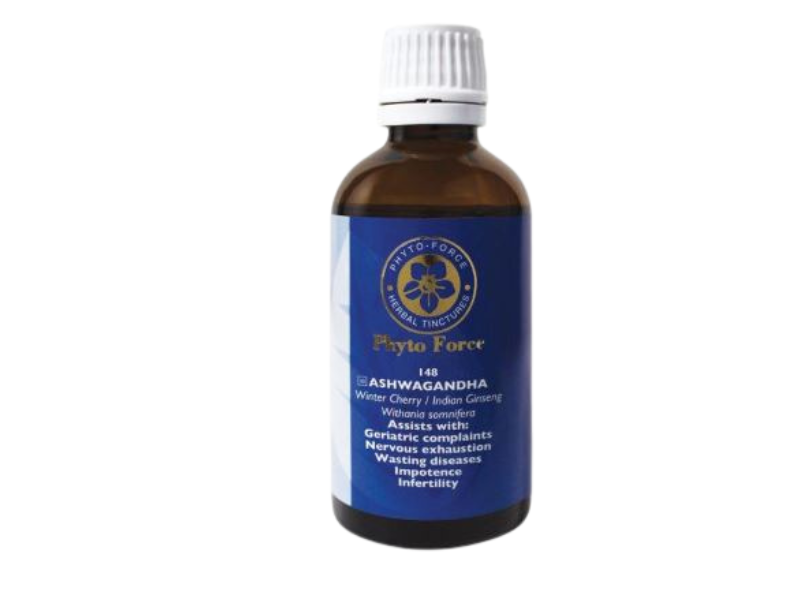
50 ml liquid alcohol extract
Average cost: R155
Available at Dischem, select health stores, Wellness Warehouse, Faithful to Nature
This is a liquid alcohol extract and a cost-effective option for gentle, long-term support. Liquid extracts are absorbed efficiently and allow flexible dosing. However, taking drops in water multiple times per day can reduce compliance for some individuals.
Effects may take slightly longer to notice compared to highly concentrated standardized extracts. It is well-suited for those who prefer liquid supplementation or have difficulty swallowing capsules.
Best suited for:
Individuals preferring liquid extracts
Flexible dosing needs
Budget-conscious consumers
Nutriherb Ashwagandha

400 mg 2:1 extract
60 Capsules per bottle
Average cost: R150
Available at Wellness Warehouse, Faithful to Nature, and select health stores
This 2:1 extract offers a moderate step up from raw herb without moving into high potency territory. It remains cost-effective while delivering a more concentrated form of the root. Recommended dose is generally 1 to 3 capsules daily. As with other lower ratio extracts, benefits may take several weeks to become noticeable.
Best suited for:
Individuals wanting slightly stronger support than raw herb
Those looking for value without high potency extracts
Sfera Ashwagandha
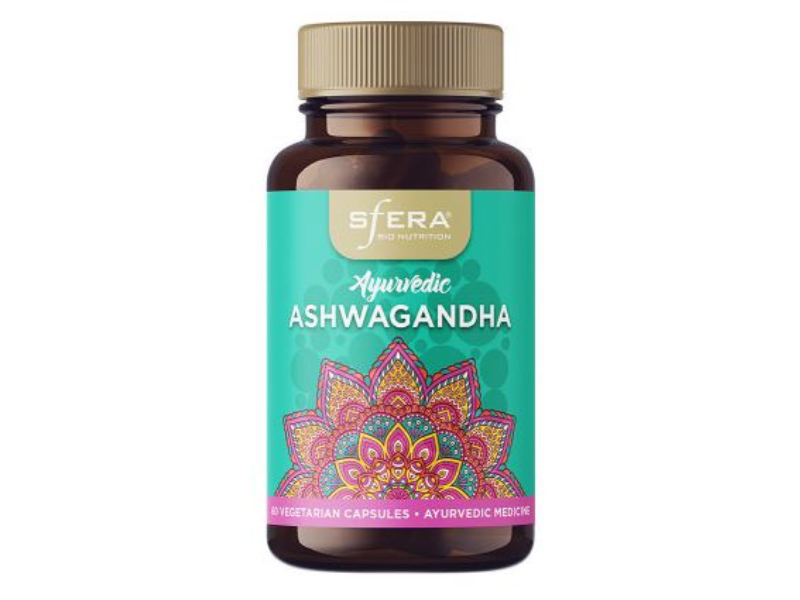
500 mg capsules standardized to 7 percent withanolides
60 Capsules per bottle
Average cost: R310
Available at Wellness Warehouse, Faithful to Nature, Dischem, select Clicks, Takealot
Sfera provides a standardized extract with 7 percent withanolides, placing it in the medium potency range. Standardization offers consistency and predictability in outcomes. The typical dose is 1 to 3 capsules daily, and many users report noticeable effects within approximately two weeks.
Best suited for:
Moderate stress
Performance support
Individuals wanting a balanced, standardized extract
A Note on Trademarked Ashwagandha Extracts
The next two products use trademarked, branded extracts. This means the extract is produced by a specific manufacturer using a proprietary extraction process. These extracts are typically supported by published clinical trials and maintain strict quality and consistency standards. While often more expensive, trademarked extracts offer a higher level of research backing and quality assurance.
Primeself KSM 66 Ashwagandha

600 mg capsules
60 servings per bottle
Average cost: R399
Available at select health stores, Wellness Warehouse, Faithful to Nature, and others
KSM 66 is one of the most extensively researched ashwagandha extracts available. It is a full-spectrum root extract produced using a solvent-free extraction process. Over 20 randomized, double blind, placebo-controlled human studies have investigated its effects.
Research has examined:
Stress and anxiety reduction
Sleep quality
Physical performance
Long-term safety
Testosterone and vitality markers
With a recommended dose of 600 mg once daily, it is convenient and compliance-friendly. Some individuals notice benefits within days, while others see gradual improvements over one to two weeks.
Best suited for:
Individuals wanting strong research backing
Athletes and active individuals
Those wanting once daily dosing
Natroceutics Shoden Ashwagandha

120 mg 40:1 extract standardized to 35 percent withanolides
60 Capsules per bottle
Suggested dose: 1 to 2 capsules daily
Shoden is one of the highest potency and highest standardized ashwagandha extracts currently available. It is also supported by double blind, placebo-controlled clinical studies demonstrating dose-dependent reductions in stress, anxiety, and cortisol, along with improvements in sleep quality. At 35 percent withanolides, this is a significantly more concentrated product. It is powerful and often effective at lower doses.
However, higher potency is not always ideal. Many individuals, particularly at two capsules daily, report feeling overly relaxed, flat, or less driven during the day. This is likely due to significant cortisol reduction. Cortisol is not inherently negative; it plays a crucial role in focus, motivation, and stress response.
Best suited for:
High-stress individuals
Those with elevated cortisol
Short-term intensive support
Evening use for sleep-focused support
How to Choose the Right Ashwagandha for Your Stress Type
Not all stress looks the same. Choosing the right ashwagandha depends on whether you are wired and overstimulated, mentally fatigued, physically depleted, or somewhere in between.
Practical Decision Guide
If you are experiencing mild, daily stress and want foundational support: Start with a raw herb capsule or a low ratio extract such as 2:1. This provides gentle modulation without dramatically shifting cortisol.
If you feel moderately stressed but still functional: A standardized mid-potency extract such as 7 percent withanolides or a researched extract like KSM 66 at the standard dose may be appropriate.
If you feel persistently anxious, overstimulated, or have elevated cortisol markers: A higher potency extract such as Shoden may be suitable, starting at the lowest effective dose.
If you feel burnt out, flat, and unmotivated: Be cautious with very high potency extracts. In these cases, overly aggressive cortisol-lowering may worsen fatigue. A moderate extract or lower dose may be more appropriate.
If sleep is your primary concern: Evening dosing of a standardized extract or a higher potency extract at a conservative dose may be beneficial.
The key is matching potency to physiology rather than assuming stronger is superior.
Cycling Ashwagandha: Is It Necessary?
Ashwagandha has demonstrated good safety in clinical trials spanning several weeks to months. For many individuals, continuous use is appropriate, particularly at moderate doses.
That said, some practitioners prefer cyclical use, such as:
8 to 12 weeks on, followed by a 2 to 4 week break
Five days on, two days off
Lower maintenance dosing after an initial higher dose phase
Cycling may help prevent psychological reliance and allows you to reassess whether continued supplementation is necessary. It is not mandatory, but it can be a practical strategy.
Contraindications and Safety Considerations
Ashwagandha is generally well-tolerated, but it is not suitable for everyone.
Use caution or avoid use in the following cases:
Pregnancy and breastfeeding
Hyperthyroidism or those on thyroid medication, as ashwagandha may influence thyroid hormone levels
Autoimmune conditions, unless supervised by a healthcare professional
Concurrent sedative medications
Individuals with very low baseline cortisol
Gastrointestinal discomfort can occur in some individuals, particularly at higher doses. Starting low and increasing gradually is advisable.
As with any adaptogen, context matters. It should not replace proper sleep, nutrition, and stress management foundations.
Final Thoughts: Stronger Is Not Always Better
There are many quality ashwagandha products beyond those mentioned here, designed to meet different budgets and physiological needs.
A key principle to remember is that stronger does not automatically mean better. The goal is not to suppress cortisol entirely, but to regulate it. In some cases, overly potent extracts at high doses may leave individuals feeling unmotivated or mentally dull, especially when taken during the day.
Choosing the right ashwagandha depends on:
Stress level and cortisol status
Sensitivity to supplements
Desired outcome
Budget
Dosing preference
When selected thoughtfully, ashwagandha can be a powerful tool. When chosen indiscriminately, it can be underwhelming or excessive. Education and individualization remain the most important factors in achieving meaningful results.


Comments